
Protecting Property in Brighton and Sussex
The start of 2026 has brought sustained and significant rainfall across the South East. Following Storm Chandra and continued heavy precipitation, building envelopes are operating beyond typical design expectations.
For property managers, freeholders, and landlords in Brighton, Hove, and Sussex, this is more than seasonal weather. It is a stress test of your building’s resilience.
At Focus Consulting, we have seen a marked increase in instructions for water ingress investigations. What begins as a damp patch or ceiling stain rarely remains minor. In most cases, visible moisture indicates a weakness within the building envelope.
Understanding water ingress and building resilience is now essential for effective property management.

Why Water Ingress Poses a Serious Risk
Buildings are designed to manage water, not absorb it. Roofs, walls, windows, and drainage systems work together to deflect moisture away from the structure. This outer shell forms the building envelope.
However, coastal locations such as Brighton and Hove create additional pressures. High rainfall combines with salt-laden winds, accelerating material weathering.
When wind-driven rain meets even a small defect, water penetrates under pressure. It travels through joints, cracks, and material interfaces. Once inside, moisture can:
- Reduce thermal efficiency
- Saturate structural timbers
- Corrode embedded metals
- Damage internal finishes
Importantly, the internal symptom rarely aligns with the entry point. Accurate diagnosis is therefore critical.
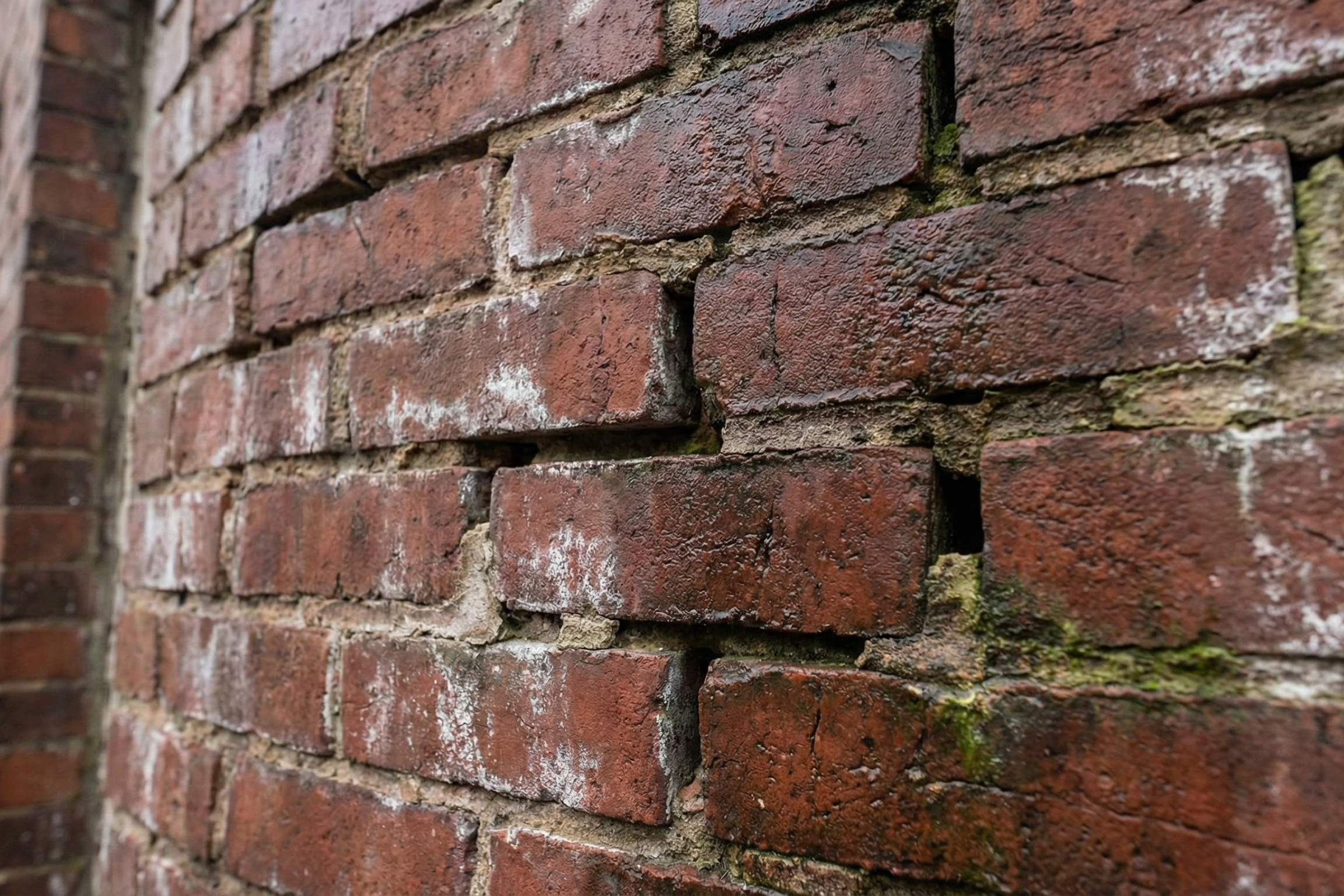
Coastal Construction and the “Sponge Effect”
Brighton’s historic buildings present specific moisture challenges. Many properties feature solid brick or bungaroosh construction instead of cavity walls.
Solid masonry relies on a natural wetting and drying cycle. During prolonged rainfall, that drying phase reduces significantly. As a result, the wall gradually absorbs and retains moisture.
Once saturation occurs, defects in pointing or render allow moisture to bridge internally. Over time, this can lead to:
- Salt efflorescence on plaster
- Localised masonry deterioration
- Persistent penetrating damp
Without early intervention, seasonal wetting cycles accelerate long-term fabric decay.
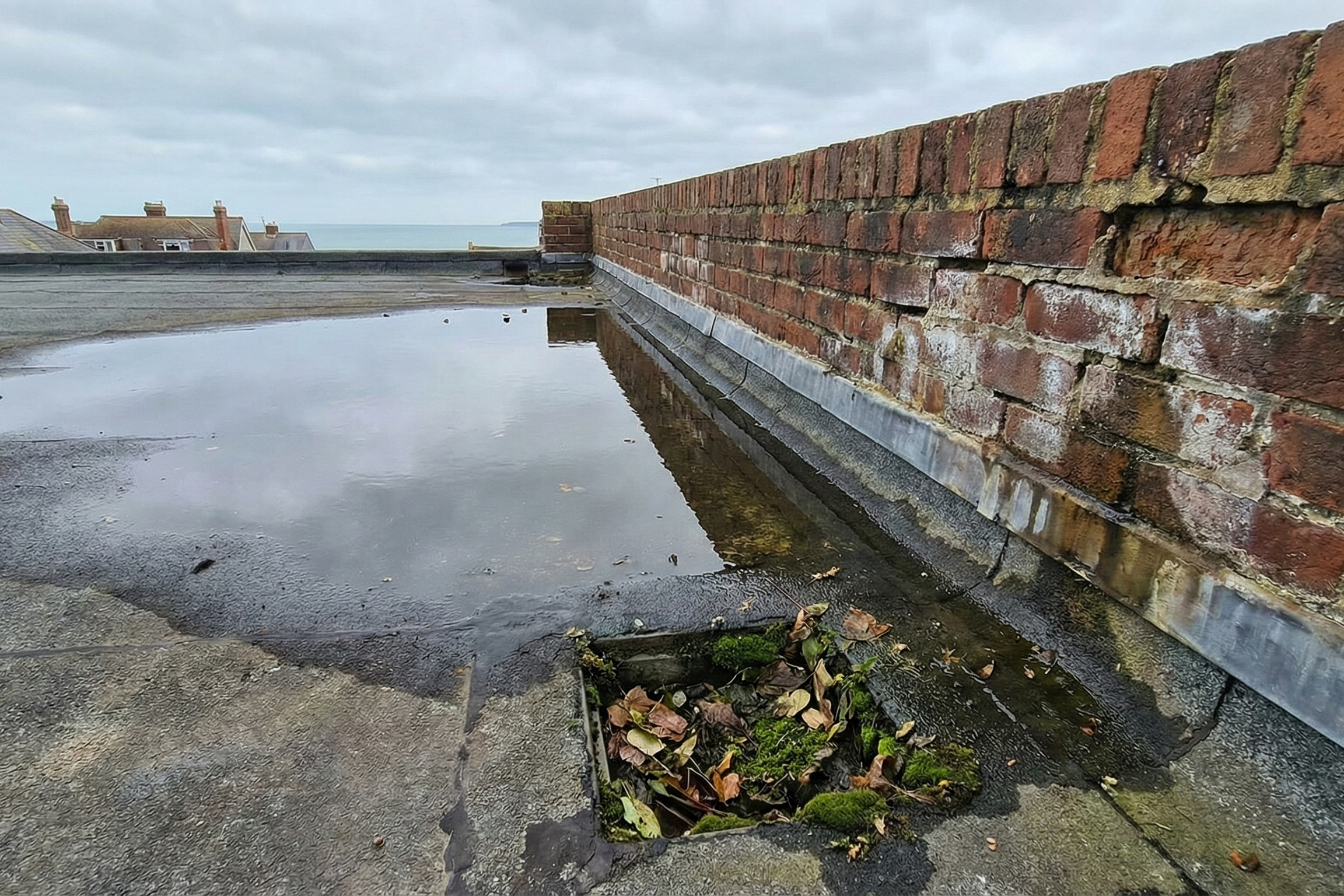
Common Causes of Water Ingress in Sussex Properties
Recent inspections across Brighton and Sussex highlight several recurring maintenance issues.
1. Parapet and Concealed Gutters
Many period and commercial buildings conceal roof drainage behind parapet walls. These systems operate effectively when clear. However, debris accumulation restricts flow.
When outlets block, water backs up into wall cavities. Because the failure remains hidden, damage can develop before detection.
Routine inspection significantly reduces this risk.
2. Flat Roof Membranes and Ponding
Flat roofs are common across residential blocks and commercial buildings. Effective drainage remains essential for long-term performance.
Standing water, known as ponding, places stress on membranes. During freeze-thaw cycles, trapped water expands and weakens junctions. Flashings and upstands are particularly vulnerable.
Early inspection prevents minor deterioration from becoming active leaks.
3. Roof Coverings and Wind Displacement
High winds can displace slates and tiles. Even minor movement compromises weather tightness. Wind-driven rain then penetrates beneath the covering.
Regular visual inspections identify these vulnerabilities before internal damage occurs.
4. Pointing and Brickwork Decay
Mortar joints protect masonry while allowing moisture to evaporate. Coastal exposure gradually erodes mortar.
Once joints deteriorate, brickwork absorbs excessive moisture. Repointing isolated areas as part of planned maintenance preserves structural integrity and prevents further deterioration.

Reactive Repairs vs Planned Preventative Maintenance
Reactive maintenance addresses visible symptoms. However, it rarely represents the most cost-effective strategy.
By the time water appears internally, additional costs often include:
- Trace and access investigations
- External remedial works
- Internal reinstatement
- Tenant disruption
In contrast, Planned Preventative Maintenance (PPM) builds long-term building resilience.
A professional condition survey identifies vulnerabilities early. It allows you to prioritise risk and allocate budgets strategically. Clearing gutters or securing flashings costs significantly less than full restoration works.
Proactive inspection protects both capital value and operational continuity.
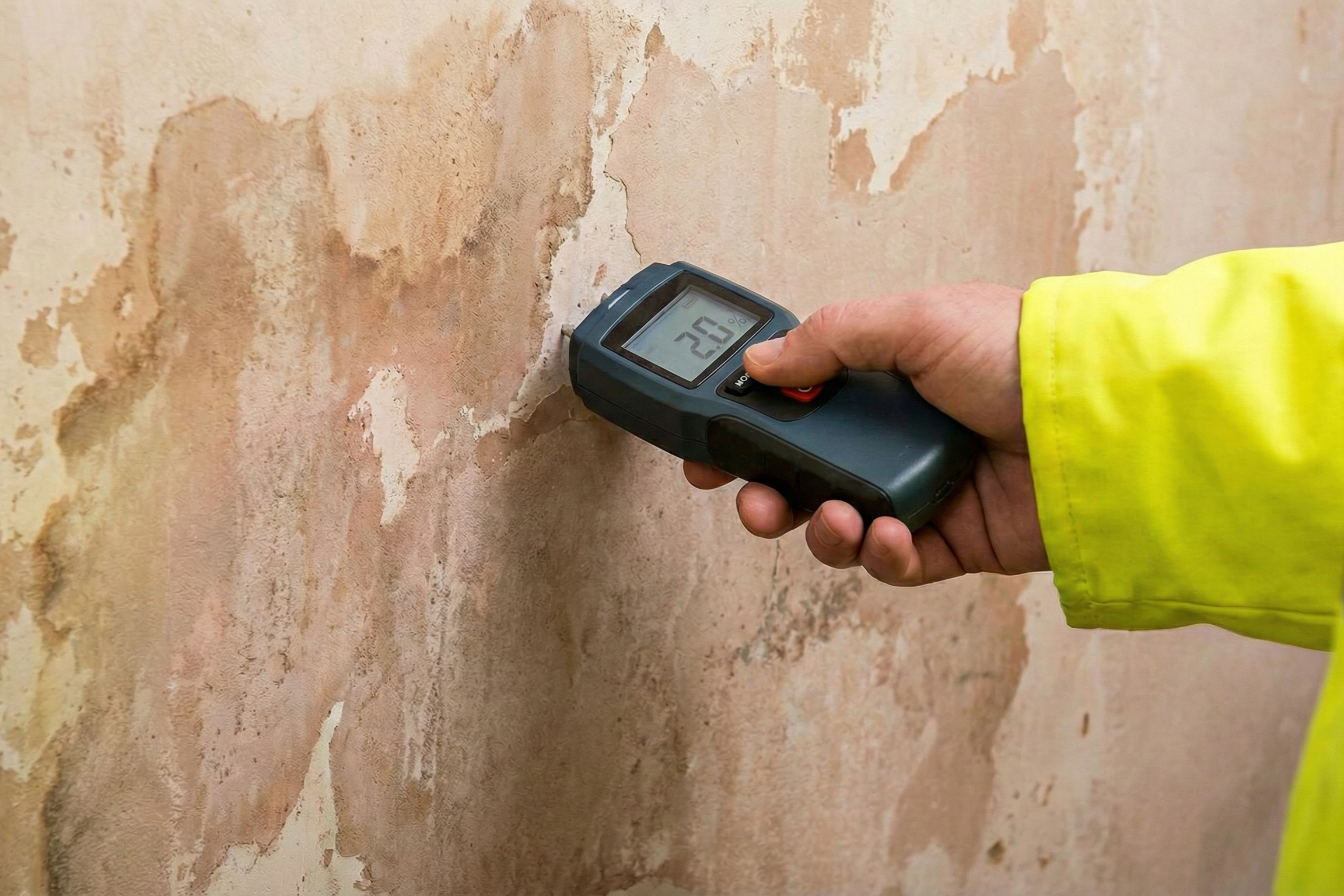
Water Ingress Investigations
At Focus Consulting, we provide structured and evidence-based water ingress investigations across Brighton and Sussex.
As Chartered Building Surveyors regulated by RICS, we assess the building holistically. We do not focus solely on the visible defect. Instead, we evaluate the performance of the entire building envelope.
Our services include:
- Water ingress investigations
- Condition surveys
- Specific defect reports
- Roof inspections
- Project management of remedial works
We identify the precise entry point and underlying cause. This approach prevents repeated patch repairs and reduces long-term expenditure.
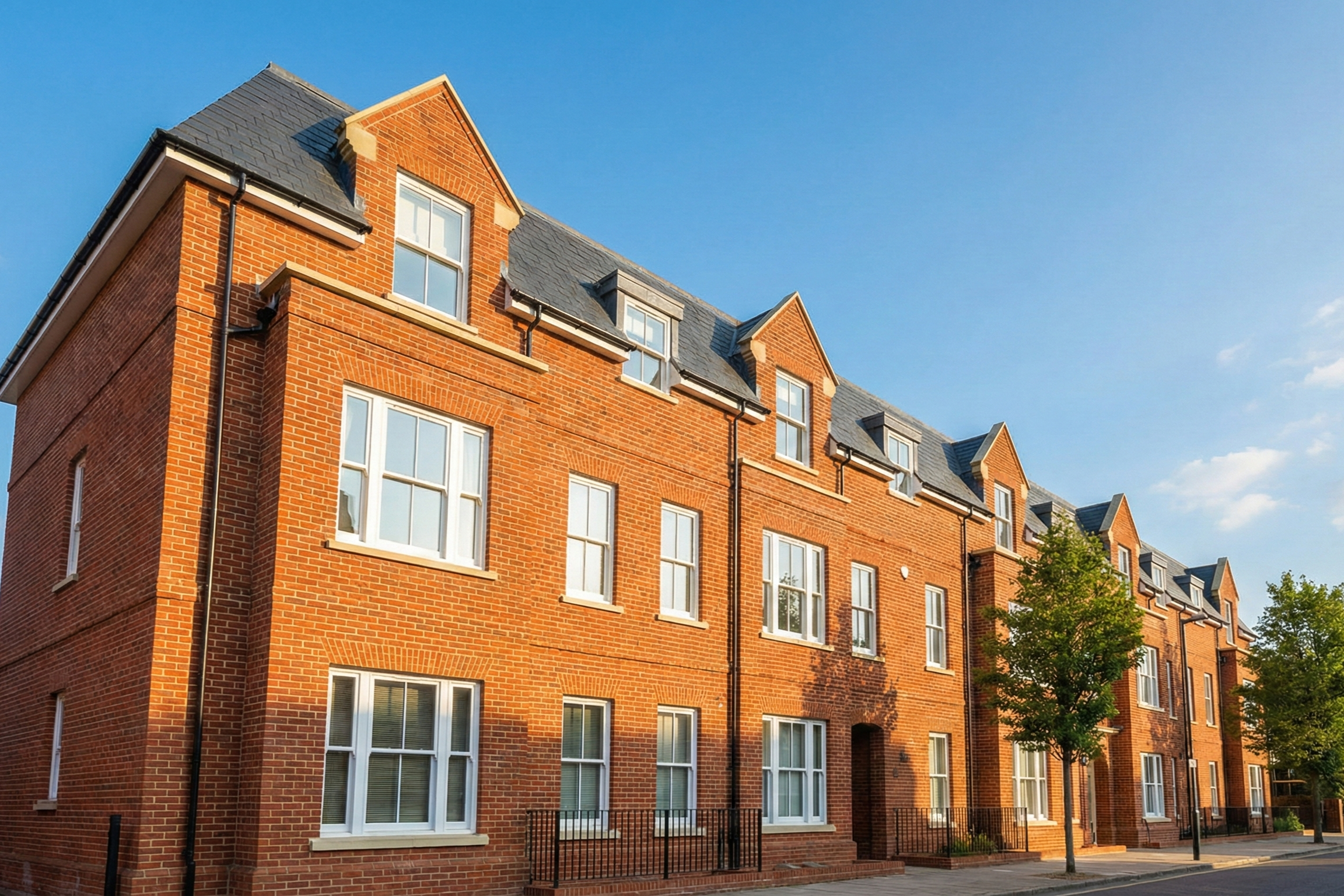
Strengthening Building Resilience for the Future
Water ingress rarely resolves without intervention. Buildings communicate early warning signs through staining, damp patches, and external deterioration.
Addressing these indicators promptly protects:
- Structural performance
- Fabric durability
- Asset value
- Occupant comfort
Sustained rainfall may continue. However, a resilient building envelope ensures your property withstands it effectively.
If you are concerned about water ingress in your residential block or commercial property, contact Focus Consulting for professional advice and a structured plan of action.